
Blog
Ultimate Tech EDC: 5 Gadgets You Should Never Leave Home Without

The modern world does not stop moving, and neither does the professional who operates within it. The concept of “Everyday Carry” or EDC has evolved significantly from its utilitarian roots of pocket knives and leather wallets. In the digital age, our toolkit is electronic, defined by connectivity, power, and data access. We are no longer just navigating physical spaces; we are navigating digital workflows that require us to be operational in a coffee shop, an airport lounge, or a co-working space at a moment’s notice. The philosophy of a tech-focused EDC is not about hoarding gadgets for “what if” scenarios, but rather about curating a lean, highly efficient ecosystem that removes friction from your day. It is about redundancy without bulk, and capability without weight.
To leave home without a properly calibrated tech kit is to risk being tethered to a wall outlet or silenced by a dead battery. The difference between a productive day and a chaotic one often comes down to five specific categories of hardware. These are not just accessories; they are the infrastructure of your mobile office. By investing in high-quality versions of these five essentials, you ensure that you are the master of your environment, capable of setting up a workstation anywhere in the world within seconds.
The Portable Power Station: High-Wattage Graphene Banks
The fear of a dead battery is a thoroughly modern anxiety, but it is one that can be completely eradicated with the right hardware. The first and most non-negotiable item in your EDC is a high-capacity portable power bank. However, the slim, lipstick-sized chargers of the past are no longer sufficient for the demands of modern devices. Today’s professional requires a power bank capable of sustaining not just a smartphone, but a laptop, a tablet, and peripherals simultaneously. We are looking for “power delivery” (PD) capabilities that exceed 65 watts, allowing you to charge a MacBook or a Dell XPS at full speed while away from a wall socket.
The technology driving these new power stations is shifting toward graphene and advanced lithium-polymer composites. These materials allow for higher energy density, meaning a battery that fits comfortably in a jacket pocket can now hold 20,000mAh to 27,000mAh of power. This is enough juice to recharge a laptop fully once, or a flagship smartphone four to five times. The form factor has become denser and sleeker, moving away from the heavy bricks of the 2010s to refined, aesthetic slabs that slide easily into a laptop sleeve.
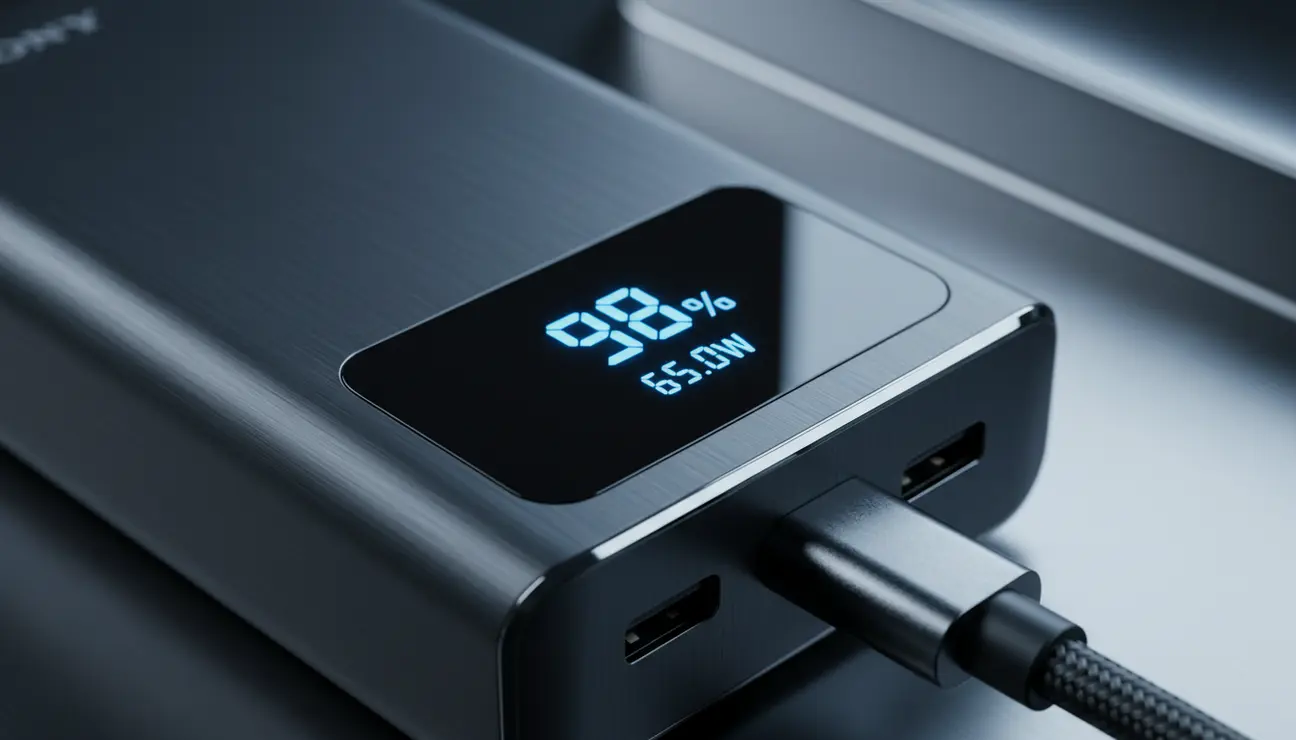
When selecting this component for your EDC, the interface is just as critical as the capacity. The ideal unit features a digital readout display—not just vague LED dots—that tells you exactly how much time is remaining until empty and the precise wattage being drawn by your devices. It should have multiple USB-C ports to facilitate “pass-through charging,” allowing you to charge the bank itself while it charges your phone overnight in a hotel room. This device acts as your safety net; as long as it is in your bag, you are immune to the scarcity of airport outlets and the panic of a 5% battery warning during a client call.
The Sonic Sanctuary: Adaptive Noise-Cancelling Earbuds
In an increasingly noisy world, the ability to manufacture silence is a superpower. Active Noise Cancelling (ANC) earbuds have transitioned from a luxury travel accessory to an essential productivity tool. Whether you are trying to focus in a bustling open-plan office, dampen the roar of a subway commute, or take a crystal-clear conference call in a windy plaza, your earbuds are your first line of defense against distraction. They are the “do not disturb” sign that you wear.
The current generation of flagship earbuds offers “adaptive” transparency modes that use artificial intelligence to filter the world around you. They can suppress the monotonous drone of an HVAC system while automatically letting through the frequency of a human voice if someone speaks to you directly. This intelligent audio processing allows you to stay aware of your surroundings without breaking your flow state. Furthermore, the microphone quality has become a paramount feature. With “voice isolation” algorithms, these tiny devices can now strip away background noise from your own audio, ensuring you sound like you are in a soundproof studio even when you are walking down a busy street.
Beyond silence, these devices are the interface for your digital assistant and your notifications. With multipoint connectivity, a single pair of earbuds can stay connected to your laptop and your phone simultaneously, seamlessly switching from a Zoom call on one to an incoming phone call on the other without you needing to open a Bluetooth menu. This fluidity is the hallmark of a refined EDC; technology should predict your needs, not force you to manage connections manually.

The Pocket Server: NVMe Portable SSD
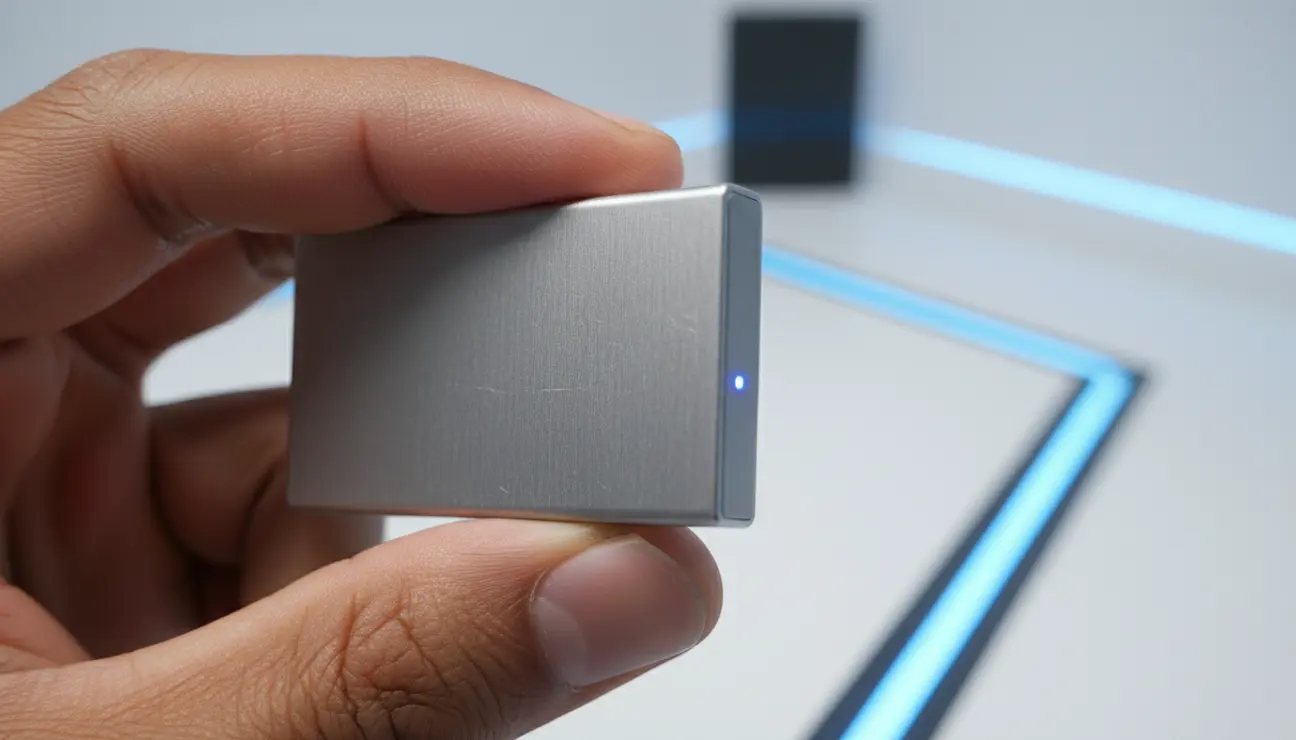
We live in an era of massive file sizes. 4K video, high-resolution RAW photography, and complex project files have made reliance on cloud storage risky. While the cloud is convenient, it is dependent on internet speed and availability. For the creative professional or the data-heavy executive, a physical backup is mandatory. This is where the portable NVMe (Non-Volatile Memory Express) SSD comes into play. These drives are a fraction of the size of the old mechanical hard drives, often no larger than a credit card, yet they offer transfer speeds that rival internal laptop storage.
Carrying a 2TB or 4TB NVMe drive in your pocket means you are carrying your entire digital life—your portfolio, your backups, your media library—offline and accessible instantly. The speed of these drives, often reaching read/write speeds of 1000MB/s to 2000MB/s, allows you to edit video or run applications directly off the drive without any lag. It essentially expands the capabilities of your laptop without requiring you to pay the exorbitant premiums for internal storage upgrades.
Durability is another key factor for an EDC storage device. Modern portable SSDs are built to survive the rigors of travel. They are often encased in rubberized aluminum shells that are drop-resistant, water-resistant, and crush-proof. This ruggedness provides peace of mind that your critical data is safe even if your bag takes a tumble. In a world where data is currency, the portable SSD is the vault you keep in your pocket, ensuring that no matter how slow the coffee shop Wi-Fi is, your workflow remains uninterrupted.
The Energy Source: Gallium Nitride (GaN) Adapter
The days of carrying a separate, heavy power brick for every device you own are over. The revolution in charging technology is led by Gallium Nitride (GaN), a semiconductor material that produces less heat and handles higher voltages than traditional silicon. This has allowed manufacturers to shrink the size of power adapters by over 50% while increasing their power output. A single, palm-sized GaN charger is now the only plug you need to carry.
A high-quality GaN charger for your EDC should feature at least three ports—typically two USB-C and one USB-A—and offer a total output of 65W to 100W. This single cube can simultaneously fast-charge your laptop, your phone, and your watch. By consolidating your power needs into one dense, efficient unit, you free up space in your bag and eliminate the “cable spaghetti” that plagues many travelers. The efficiency of GaN also means these chargers stay cool to the touch, extending their lifespan and safety.
The versatility of the GaN charger extends to international travel as well. Many of the best models feature interchangeable plugs or mechanisms that adapt to UK, EU, and US outlets. This universal compatibility means you are never hunting for a voltage converter or a specific adapter. You simply plug in your GaN charger, connect your USB-C cables, and your entire mobile office comes online. It is the heart of your power ecosystem, pumping energy into all other devices with minimal footprint.
The Universal Bridge: A High-Bandwidth USB-C Hub
The drive toward thinner, lighter laptops has come at a cost: the disappearance of ports. The modern ultrabook often features nothing more than two USB-C slots, which can be severely limiting when you need to present to a projector, read an SD card, or connect to a wired ethernet network for stability. To bridge the gap between your sleek machine and the legacy world of peripherals, a compact, multiport USB-C hub is essential.
This gadget acts as the translator for your tech. A robust hub will expand a single USB-C port into an HDMI 4K output, several USB-A data ports for legacy thumb drives or mice, SD and MicroSD card slots for media ingestion, and often an Ethernet port for gigabit internet. Crucially, it should also support “Pass-Through Charging,” allowing you to plug your GaN charger into the hub to power the laptop while simultaneously using all the other ports. This single dongle transforms a portable laptop into a full desktop-class workstation in seconds.
When selecting a hub for EDC, build quality is paramount. It should have a braided cable to withstand constant bending and an aluminum housing to dissipate the heat generated during data transfer. Cheap plastic hubs often overheat and disconnect drives mid-transfer, a risk you cannot afford. The hub is the final piece of the puzzle, the key that unlocks the full potential of your laptop and ensures that no matter what technical environment you walk into—a boardroom with an old projector or a hotel with only wired internet—you are prepared to connect and perform.

The Philosophy of Readiness
Assembling the ultimate tech EDC is an exercise in self-reliance. It is about acknowledging that the modern work environment is fluid and unpredictable, and that your ability to perform depends on the reliability of your tools. These five gadgets—the graphene power bank, the ANC earbuds, the NVMe SSD, the GaN charger, and the USB-C hub—form a symbiotic ecosystem. The charger fills the bank; the bank powers the laptop; the hub connects the data; the SSD stores the work; and the earbuds provide the focus to get it done.
When these items are always packed and ready, the mental load of leaving the house disappears. You no longer worry about battery percentages or storage space. You walk out the door knowing that you have the infrastructure to handle any task, any delay, and any opportunity that comes your way. This is the true value of a curated EDC: it is not just about the gadgets themselves, but about the confidence and freedom they provide. You are untethered, yet fully connected; mobile, yet fully capable.
